
Top AI Use Cases & Benefits of Grocery Delivery Apps: A Modern Solution for Everyday Needs

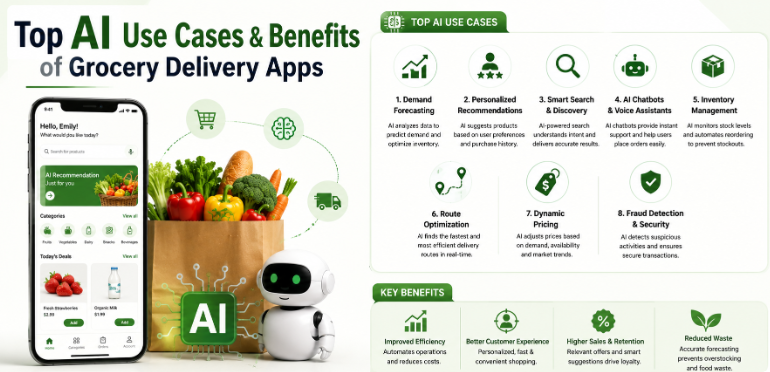
The advent of the mobile app revolution has brought about changes in the whole retail industry, as is evident through the remarkable changes observed in the grocery industry. Due to the rising preference of convenience among consumers, grocery delivery apps have been introduced as the ideal solution for buying necessities without leaving the comfort of one’s home. Such technology allows the consumers to browse, purchase, and have their groceries delivered right to their doorstep.
With the continuous transformation of the retail industry by digital means, grocery delivery applications have become indispensable in modern households and businesses.
Why Grocery Delivery Apps Are Gaining Popularity
The use of smartphones and the internet has greatly affected the behavior of the consumer during shopping. Consumers like devices that make things easier for them. By using grocery delivery apps, consumers can do away with the lengthy lines in supermarkets and even the activity of shopping.
Smart Shopping & Inventory Management
Automated Shopping Lists
AI simplifies grocery shopping by automatically creating shopping lists from uploaded receipts, fridge photos, or handwritten notes. It accurately identifies products, organizes them into categories, and adds them to the shopping cart, saving users time and effort.
Voice-Based Grocery Lists
With AI-powered voice recognition, users can create shopping lists simply by speaking. The system understands product names, preferred brands, and quantities, making list creation faster and more convenient.
Smart Pantry and Expiry Tracking
AI continuously monitors pantry inventory and notifies users when essential items are running low or approaching their expiration dates. This helps reduce food waste and ensures households stay well-stocked.
Personalized Shopping & Meal Planning
AI-Powered Recipe Recommendations
AI recommends personalized recipes and meal plans based on the ingredients already available in the user’s kitchen. This makes meal preparation easier while minimizing unnecessary grocery purchases.
Nutritional Analysis
Users can scan a barcode or capture an image of a food item to instantly receive detailed nutritional information, including calories, protein, carbohydrates, fats, and essential vitamins.
Personalized Product Recommendations
By analyzing shopping history, dietary preferences, and buying behavior, AI delivers personalized product suggestions, exclusive discounts, and relevant promotional offers.
Intelligent Ordering & Delivery
Smart Product Substitutions
When a selected product is unavailable, AI automatically recommends the closest alternatives based on the customer’s preferences and previous purchases.
Dynamic Pricing
AI adjusts product pricing in real time by considering factors such as demand, inventory levels, and product freshness, helping businesses maximize sales while offering competitive prices.
AI-Optimized Delivery
Advanced AI algorithms optimize delivery routes using real-time traffic conditions and order locations, resulting in faster deliveries, lower transportation costs, and improved customer satisfaction.
Key Benefits of Grocery Delivery Apps
1. Convenience and Time Savings
One of the biggest advantages of grocery delivery apps is convenience. Customers can browse products, compare prices, and place orders from anywhere at any time. This saves valuable time that would otherwise be spent traveling to and from a grocery store.
2. Enhanced Customer Experience
Modern grocery apps provide personalized recommendations, easy navigation, and secure payment options. These features create a smooth and enjoyable shopping experience that encourages repeat purchases.
3. Access to a Wider Product Selection
Unlike traditional stores with limited shelf space, grocery delivery platforms can showcase a broad inventory of products. Customers can easily discover new brands, specialty items, and exclusive offers.
4. Real-Time Order Tracking
Users can track their orders in real time, receiving updates from order confirmation to final delivery. This transparency builds trust and improves customer satisfaction.
5. Better Inventory Management
Businesses can use digital systems to monitor stock levels, reduce waste, and improve operational efficiency. Effective inventory tracking ensures that customers receive accurate product availability information.
6. Increased Revenue Opportunities
Grocery delivery apps allow businesses to reach more customers beyond their physical locations. Additional revenue streams can be generated through subscriptions, delivery fees, advertisements, and promotional campaigns.
7. Contactless and Safe Shopping
Health and safety concerns have increased the demand for contactless services. Grocery delivery apps provide a secure shopping alternative by minimizing physical interactions.
Use Cases of AI in Grocery Delivery Apps
1. Predictive Analytics
Predictive analytics based on AI uses data from past sales, seasonal patterns, consumer trends, and many more to predict future purchases. Such capabilities will help grocery companies make better decisions regarding inventory management and avoid any shortages and waste.
2. Natural Language Processing (NLP)
Natural language processing allows AI chatbots and voice assistants to understand the query of customers in natural language form. It offers immediate assistance and helps process voice-based grocery orders and other queries of the customer.
3. Personalized Product Recommendations
AI takes into account browsing history, buying habits, food preferences, and shopping behaviors to offer personalized recommendations to shoppers. Such recommendations create an engaging shopping experience, create more cross-selling opportunities, and ensure customers make repeat purchases.
4. Intelligent Inventory Management
AI ensures that there are enough stocks of popular grocery items in the store by continuously monitoring inventory, predicting demand for such products, and automatically managing inventory. It saves on unnecessary costs while ensuring there is no overstocking or shortage of popular groceries.
5. Smart Route Optimization
AI analyzes live traffic conditions, weather updates, delivery locations, and driver availability to determine the fastest delivery routes. This reduces fuel costs, shortens delivery times, and improves customer satisfaction through timely order fulfillment.
6. Dynamic Pricing Optimization
The system analyzes changes in demand, competitor pricing strategies, shelf life of goods and inventory levels to set the price. Dynamic pricing allows for making maximum profit from selling while providing customers with competitive prices and discounts.
7. Computer Vision for Product Recognition
It allows grocery applications to recognize goods through the picture or barcode scanning. It makes it possible to fast find the products, check its freshness, and receive nutritional information using image recognition capabilities.
8. Fraud Detection and Secure Payments
AI detects unusual payment activities, suspicious transactions, and fraudulent behaviors in real time. Advanced machine learning models enhance payment security, reduce financial risks, and protect both businesses and customers from cyber threats.
9. AI-Powered Customer Support
The role of AI chatbots includes providing customer services round-the-clock through order tracking, issuing refunds, answering queries about products, and updating delivery information, thus increasing efficiency, raising customer satisfaction levels, and decreasing the work load on human assistants.
10. Demand Forecasting and Supply Chain Optimization
Through prediction of future demands based on the trends of the customers, seasonal changes, and regional buying behaviors, companies can plan for efficient procurement, warehousing, and suppliers’ coordination.
Top AI-driven grocery delivery platforms
Various mobile apps use artificial intelligence in online grocery shopping, which allows increased user engagement. We are discussing the top 5 platforms that deliver AI-driven features, reduce long waiting times, and ensure personalization.
| Platform | Country | AI Technologies Used | Key AI Use Cases |
| Instacart | USA | Machine Learning, Predictive Analytics, NLP | Personalized recommendations, smart product substitutions, inventory prediction, AI search, and delivery route optimization. |
| Amazon Fresh | Global | Generative AI, Machine Learning, Computer Vision | Dynamic pricing, personalized shopping, demand forecasting, cashier-less checkout, inventory management, and logistics optimization. |
| Walmart Grocery | USA | Machine Learning, NLP, Predictive AI | Voice shopping, automated inventory management, customer behavior analysis, personalized offers, and supply chain optimization. |
| Kroger | USA | Predictive Analytics, Machine Learning | AI-powered promotions, digital coupons, demand forecasting, inventory optimization, and customer personalization. |
| Ocado | UK | Robotics, Computer Vision, AI Automation | Warehouse automation, robotic order fulfillment, inventory optimization, demand prediction, and intelligent logistics management. |
| Blinkit | India | Machine Learning, Predictive Analytics | Delivery time prediction, route optimization, smart inventory management, personalized recommendations, and demand forecasting. |
| Zepto | India | Artificial Intelligence, Machine Learning | Dark store optimization, AI-powered inventory planning, delivery route optimization, demand prediction, and personalized product recommendations. |
| BigBasket | India | Machine Learning, Recommendation Engine | Personalized shopping suggestions, smart search, inventory management, dynamic pricing, customer segmentation, and AI-powered customer support. |
Essential Technologies Behind Grocery Delivery Apps
The development of an effective grocery delivery application would necessitate the use of high-level technologies such as GPS, secure payment gateways, artificial intelligence, cloud computing, and inventory management. This technology will ensure that businesses provide an impeccable shopping experience to their clients.
An effective grocery delivery app development company will assist in providing these features to a business to create a functional, scalable, and secure platform. Features such as live tracking of orders, automation, digital payments, and inventory management are among the most important features needed for developing a modern grocery delivery application.
Future of Grocery Delivery Apps
The future of grocery delivery apps looks promising as technologies like artificial intelligence, machine learning, and predictive analytics continue to evolve. Features such as voice-assisted shopping, smart recommendations, and automated inventory forecasting will further enhance customer experiences and operational efficiency.
Conclusion
The Benefits of Grocery Delivery Apps make them an indispensable solution for modern consumers and businesses. From saving time and improving convenience to increasing revenue and enhancing customer satisfaction, these applications continue to transform the grocery retail landscape.
Online grocery shopping has inherent strengths and weaknesses. With the right strategy, you can leverage its advantages and find ways to work around the downsides.
Your online grocery strategy begins with picking the right grocery e-commerce platform. Helpful Insight Grocery’s dedicated solution for grocery business owners helps streamline and optimize operations.
The Author





No Comment